-

Edit: Here’s the link to the Substack! https://faithchang.substack.com
When I started working on my book, I imagined I’d be posting in-process reflections along the way. Writing for me has always happened in the margins of life (a fact I used to resent but have learned to be grateful for), so it turns out my brain didn’t actually have space for anything other than the manuscript. I did manage to snap a few photos of me working on the book Sam-I-Am style: in a car and on a train, at a park (using a clipboard I borrowed from my kids which was actually from my childhood), with some trees, and in Lamott and Herbert’s (literary) company.
I’m excited to be sharing more about the book in the upcoming weeks. Right now it’s made its way to potential endorsers and I’m praying through the nerves of waiting to hear back. But also, now that I’m feeling a bit of mental space clear up, I’m hoping to be writing regularly again and decided to finally start a newsletter.
For years I’ve been enjoying receiving regular emails from writers I appreciate. I like not having to be on social media to keep up with their work, being able to forward it to friends and mark it to read later, and having it in my archives for future reference. Social media can be kind of hit or miss with sharing what I write on my blog, so—after reading a pretty compelling post by Lore Wilbert about quitting the algorithm and just writing, I finally made my way over to Substack to start my own.
I’m hoping to send my first newsletter soon, and even though it’s called a “newsletter,” it’ll be the same kind of content I’ve been writing since Xanga days. I’ll continue to share reflections on what God’s been teaching me with the prayer that God would take my words and, by his grace, use them to give courage to others also muddling along in faith. I’ll also be posting updates on my book releasing with The Good Book Company next year.
If you want to get those posts/essays/thoughts directly sent to your inbox, you can subscribe below. If you’ve already signed up for emails of my blogposts (i.e. if you’re getting this in your inbox), I’ll be transferring emails before sending out my first newsletter, so you should get it automatically.
And as always, “if my writings have been useful to you, may the Lord have the praise. To administer any comfort to his children is the greatest honor and pleasure I can receive in this life.” (John Newton)
-
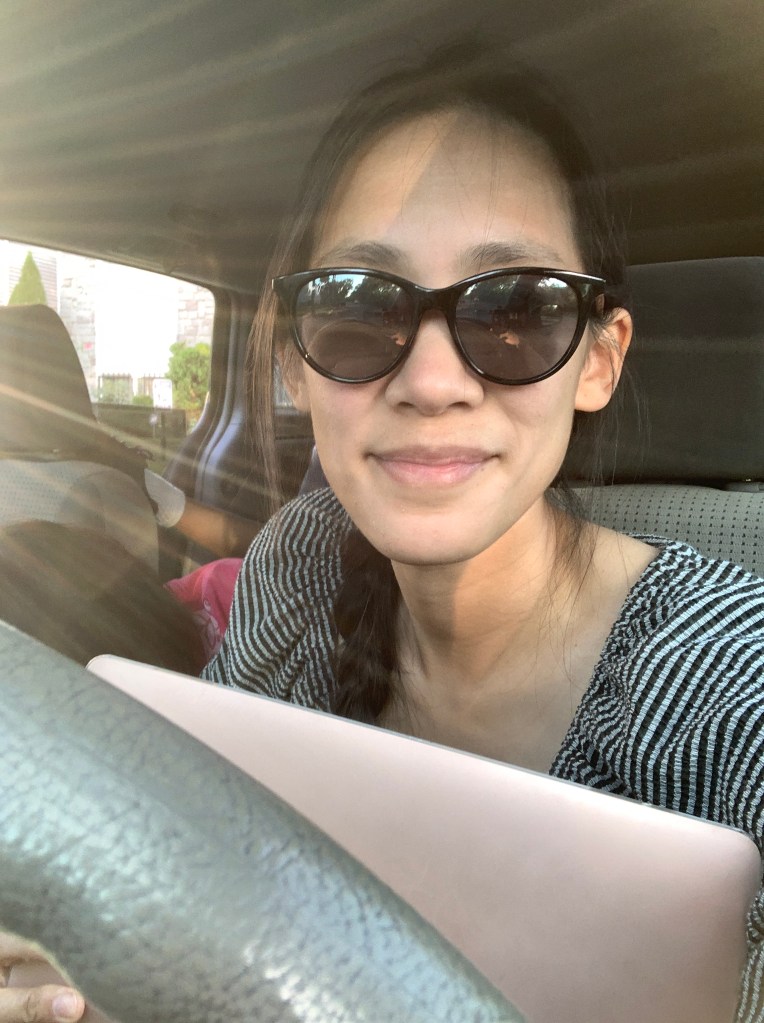
I snapped this photo in my car a few weeks ago while my older girls were in piano lessons. Me with my laptop, working on my manuscript. I’m not sure if I got much writing done with the younger two in the back, but I probably did some, hence the selfie and the smiling.
If one thing surprised me after I became a stay-at-home mom, it was that I’d feel called to something outside the context of homemaking and ministry. And though I’ve settled into writing over the years, I still feel the underlying tension of needing to figure out what to do with my limited supply of time, energy, and health given the various desires and duties I have.
One thing that’s encouraged me immensely as I’ve navigated motherhood and writing is hearing from other Christian women who are also mothers, and also have been called to create.* Their sharing about self-doubt. Their wondering, “What is this—a hobby? Leisure? Or something else.” (I think it was Jen Pollack Michel who somewhere put words to my own wonderings here.) Their honesty about how making space to create has meant sacrifices and hard choices, and how things don’t always fall into place in neat ways. As they share the way they process these dual callings (mom + writer/artist), I am able to imagine what faith and faithfulness might look like for me.
So I thought I’d also share this in-process photo because I went through a familiar-to-me cycle today. From despairing that I’ll ever have the time or energy or solitude to finish the first draft of a chapter, to having a painful knot in my stomach thinking about all I need to do (including but not limited to writing), to doubling over onto my bed to pray, to having a few surprising hours of writing granted to me, to feeling simultaneously guilty about not engaging more with my children and wishing I had more time alone. Also, to gratitude.
I share because though I’m still in need of wisdom on how to make things work with family, ministry, work, and writing, I’m grateful for the space God gave me to work on a chapter of my manuscript today.
I’m thankful because each time I come out of this despairing to grateful cycle, the inkling that “God provides” grows. Each time, I am a bit more prepared to push back against the panic of “I am never going to have time for this!” when it invariably rises again.
And I’m thankful for many reminders lately that I haven’t ended up here by my own force of will. God has answered so, so many prayers up to this point. He has prepared good work for me that I am walking into. His calling is his equipping and provision. And that is so very heartening.
*Here are some of these women: Jen Pollack Michel, Maile Silva on The Stories Between Us, Phaedra Jean Taylor, and Rebecca K. Reynolds.
-

At the playground, my youngest sits in a lopsided plastic car on springs and calls me using an imaginary phone. Ring Ring!…Now you pick up—no, hold the phone like this! I’m her substitute sibling while her real ones are in school, so she’s sticking by me more than usual.
She runs to play, then back to sit on my lap. Out to play, then back again.
She pulls out a notebook from her narwhal backpack and “reads” it. Mark 35. Now you read it. Say “God made the world.”
She attempts to walk up the slide.
She asks all her questions.
She is loved with an everlasting love.
I think about this as I watch her stand in front of me in all her three-year-old fullness. She’s hilarious and expressive and curious and so, so, fiercely loved.
Do you really love her more than I do?, I ask God, heart swelling with the answer I’ve been meditating on.
I’ve been thinking on this love in light of a picnic our family attended recently. It was a gathering for Staten Island pastors and their families, hosted on our friends’ wide church lawn and complete with bouncy house, unlimited cotton candy and popcorn, and all-around fun for the kids. PK’s need love too, said a fellow ministry wife. It was so thoughtful and generous, and the Chang kids had a blast.
Seeing everyone gathered in for prayer though, that’s when it hit me, God’s love. Particularly, God’s his love for the people living here on our island. Each pastor’s family—called to love and serve the people here— stood a living witness to me of this love. A testimony that God sees and remembers those on the “forgotten borough”.
This conviction deepened in conversations as I listened to individual stories of how God called these men and women to their churches. They are proof to me that God loves those we have loved and have prayed for, and that he loves those we don’t yet know but hope will come to know him. The Good Shepherd is seeking out his lost sheep on Staten Island. That he would call under-shepherds here for this task is evidence of his pursuit of souls. Of his care.
One of the most, if not the most, unfair charges I’ve ever leveled against God in ministry was about this care. When the needs have been great and the stakes high. When I had cared deeply, but couldn’t do anything to stop the things that would harm those I loved. When he could have stopped these things, but didn’t.
At that time, God spoke to me his assurance that all he does is not in spite of, but because of his care. But I see another way now that I have been wrong to raise such accusations against God, either out loud or deep down in unspoken ways.
I would accuse God of not caring, but why did I care, if not because he did?
What if I cared because God cared?
I mean this not just in the sense that I was like him in my caring, or that he commanded me to care. I mean, what if the very fact of our being where we are—hearts breaking for the suffering and brokenness around us—is in and of itself an act of God’s steadfast love toward those we would accuse God of not loving?
I think I’m influenced by Luther’s work on vocation here. Our callings, according to Luther, are not just jobs assigned by God. They are “masks” of God behind which he actively works in the world. God himself milks the cows through the milkmaids, he said. This is what I was so convinced of through the presence of those ministry families at the picnic—God’s active love for Staten Islanders in the calling of men and women to serve our churches. He loves through our love.
Perhaps this is what John meant when he wrote that though no one has seen God, his love is perfected in us when we love one another (1 John 4:12). The moments my heart is moved with compassion, the conviction to intercede and do good for another, these are acts of my joining God where he is already at work, where he actively cares and has already been caring. In our love, the love of our unseen God is made visible.
Recently, I have watched many of my friends get hit with wave after wave of trials as they serve God—in difficult church dynamics and with a break-in and floods and health problems and loss. I’m walking with some of the godliest people I know as they navigate unfulfilled, good desires. I see parents at a loss for what to do with prodigals and I can’t shake the faces of some of these wandering young people from my mind. I join with believers as they pray for the sick and newly widowed and abused. I scroll my news app through reports of wars and floods and horrible things people to do one another.
The temptation for me has been to lower my head in despair while my heart slowly hardens to God who could fix it all in an instant, but chooses not to.
But what if I care because he cares?
What if it is God himself who prompts my compassion, conviction, lament, prayer, and a desire to act in response?
How often have I known such love, the care of the invisible God made tangible through the concern and compassion of one of his children? And when I’ve received this love, didn’t I know it to be, in a very real way, the love of God?
This makes a difference in the way I think about prayer, especially when overwhelmed by the needs around me. Luther has said, “Prayer is not overcoming God’s reluctance,” and I think today how prayer is not overcoming God’s indifference either. I am not charged with reminding God of those he’d forget otherwise. Rather, my prayers—for the world, for unreached people, for the suffering, widowed, fatherless, doubting, prodigal—are being prompted by his word and Spirit because he so loves.
I need to remember this as I parent too. God has loved my children from before the foundations of the world, and in his coming, death, and resurrection. My loving is a participation and expression of his vast, wide, deep, long-suffering care, it is a drop in the ocean of his tremendous love for my kids. This knowledge of his love for them anchors me when I’m anxious about their souls and futures and wellbeing. And it brings me to a deeper knowing of the love that surpasses knowledge when I feel my heart explode with affection for my little one at the playground.
What if my care is evidence that he cares? It is not the whole case for his love, not even close, a partial fingerprint perhaps. But it’s what he has brought to me this week. And at the very least, it is setting a course correction for my own heart.
This is the reminder then, for me. Maybe for you too. To take heart when those we love are going through dark days because God loves them too. He has not forgotten the ones we fear he has forsaken, and he has not overlooked the needy we have been called to serve. Your brokenheartedness, your tears, your pleading, your lament, your service, your pursuit, your waiting, and your prayers on their behalf— these are evidences of his remembrance and love.
Beloved, he cares. And you do because he does.
-

Two years ago, the kids cleared the living room and, with the help of my sister-in-law, put on a short play based on Sally Lloyd-Jones’ Baby Wren and the Great Gift. In it, a newly hatched baby bird (ours had a paper beak tied around her head with string), observes the other animals in her canyon with awe. As each tumbles, swims, dives, or soars, she exclaims, “How wonderful!” Just as she wonders, “What can I do that’s wonderful?”, the sun sets (our 9-year old stagehand held up a red blanket behind the couch at this point). The wren bursts into song for all the beauty around her. Eagles, whose soaring she’d admired, turn to her and say, “You are little, but your song fills the whole canyon. How wonderful!”
The image of this baby bird singing catches my imagination. The whole story does, really. The way she is filled with wonder at the rest of creation. How her wonderful gift flows out of her in thanksgiving. The way the eagles speak to her so kindly of this gift. It’s different than other children’s stories for the small and insecure. There’s no proving or comparing and ending up better than. Instead, there’s freedom and joy, a spirit of generosity and unselfconsciousness in the way she joins the rest of creation, doing what she was made to do. She is the magnanimous man G.K. Chesterton writes about, who is great but knows he is small.
I first heard about Chesterton’s magnanimous man on a podcast episode with authors Jonathan Rogers and Kelly Kapic. Talking about Thomas Aquinas’ understanding of magnanimity (greatness of spirit) and pusillanimity (smallness of heart), Kapic says,
The reality is God has given gifts. And to actually always shy away and go, “I don’t have anything. I don’t bring anything”— that can be just as problematic as thinking you’re the answer to everything. It’s a problem to say, you’re not an answer to anything.
…We need to be willing to believe people when they point out gifts we have, cause gifts are more often— not always, they need work and cultivation— but they’re often more what you might call natural to us…Part of what Aquinas is saying is you have gifts, and when people are helping you see those gifts, recognize, believe that is from God, and now use it. You have a responsibility. Not in a bad way, but in a joyful way. Like, look what he’s giving you and use it. You’re good at the flute. Don’t be shy about it. Help us. We’re enriched when you play, and we’re impoverished when you don’t.
I love how communal this vision of gifts is, that it’s through the voice of others that we learn how we are uniquely designed to help others flourish. And that in this way, we worship God. I also love the sense of grace in all of it. “As each has received a gift,” writes Peter, “use it, to serve one another, as good stewards of God’s varied grace” (1 Pet. 4:10). Gifts are truly gifts, freely distributed by God himself to be recognized, received with gratitude, and used for good. In another article, Kapic explains that magnanimity is not trying to be great apart from God, but employing “gifts as an expression of worship and as a way to help others.”
Here’s why this way of thinking about gifts is so helpful for me. Part of what sanctification has looked like in my life has been God reframing my thoughts of greatness, or more specifically, my own desires for greatness. Which is to say, he’s humbled me. Through the years, he’s increased my contentment and joy in the hidden things that are of great worth to him. He’s been discipling me in refusing to believe that what is impressive to the world, even the Christian world, is always impressive to God. To value the small and insignificant, because he does too. I am not there yet, but by his grace I have grown.
It’s been hard at times then, having been disciplined by God regarding these things, to know the difference between true humility and small-heartedness. Beset with self-doubts and fear of my own pride, and sometimes just in ignorance, I’m often slow to admit I have anything to offer. I want to grab a basket and put it over my lamp because it’s safer. This way I won’t make mistakes. Won’t sin. Won’t be tempted to boast. Won’t fail. But, here is God’s immense grace to me, it’s been the body of Christ who’ve come around me time and time again, patiently speaking courage into my heart. Recovering my hidden lamp from the corner, they’ve handed it back to me saying, “Here’s your gift. Use it.“
I signed a book contract earlier this month. It was an unremarkable process insofar as I did what I believe are the normal things. I wrote, I submitted to a publisher I truly appreciated, I waited, and I heard back. But the process was also an unveiling for me, God in kindness drawing out an admission from my heart that, and this feels strange even now to say, I do want to write a book.
The process thus far (still only just beginning!) has also been soaked with the grace of God’s people. Possibly my favorite part of receiving an offer was being able to tell those who’ve been praying and cheering me on, excited for the doors God might open for me. I forgot all about magnanimity vs. small-heartedness talking to friends this week about the book contract. It goes to show you…anyone can write a book!, I’d said. But they didn’t laugh or let what I said slide and, before we left, prayed for me and this good work God has assigned to me.
The publisher is taking a risk on me, I know, a relatively unknown writer with a very small platform. Yet I am encouraged that in extending an offer, they have also in effect said, “Hey, we think this is a need for God’s people, and we believe you are called to meet this need in some way.”
You are little, but we think your song will help others.
I remembered the story of the baby wren recently after listening to a song about how we’re made to join creation in praising God. I won’t stop singing, I won’t stop singing / These lungs were made to sing your praise, were the lyrics. I thought of the wren’s song. Like her, I am little. And like her, a song rises unbidden in my chest nonetheless, one I was made to sing.
-
Now may be the time to consider taking some things off your plate. I’d actually been about to heap on some new ministry opportunities, and said as much before laughing weakly. A few days later, I wrote an email backing out of a new church initiative. I pressed Send and the tears welled.
I want to be led, but not this way. Give me burning conviction from the Scriptures, promptings of the Holy Spirit, and events too unlikely to be dismissed as coincidences. But to make choices informed by my body, by pain and weakness? Here I become a 2-year-old trying to shake loose a caregiver’s grip with all my squirming toddler might.
Motherhood especially has been a classroom in being led by way of constraints, but I suspect it’s also a natural part of getting older. As time passes, we become more aware of the limitations that, much like a river’s banks, have held and directed the flow of our lives. It turns out that I’ve always been constrained by my callings (as a mom, daughter, neighbor, friend, church member, citizen, etc.), my particular time and place, and my unique family history, ethnicity, gender, socioeconomic status, gifting, and body.
It’s the last bit that I’ve most often strained against, especially these days. When facing less-than-ideal circumstances, it has helped me to remember that just as trails are marked by the unyielding presence of the trees that line them, so God often makes my way known to me through interruptions. But with chronic illness, it’s not so much the redirection— God saying, “I want you to serve here, not there”— but the shrinking of my capacity that I am wary of. My body is dictating the vigor and pace I can walk this path, and it is painfully slow, halting even.
I think it may be helpful for you to hear this, my sister prefaced, shortly after my autoimmune diagnosis. She then told me about another woman, in ministry and chronically ill, who’d shared about needing to trust that there was no good thing God wanted her to do that she wouldn’t be able to do because she was sick.
I’ve been here before. God has been whittling away at this part of me for about as long as I’ve known him. Taking my raw yearning to be used by him for his glory and refining it in the heat of ministry, motherhood, now illness.
What if God won’t use me?, I’d said in high school, fearful that my sinfulness would render me out of service in the Kingdom. In God’s kindness, the mentor who heard my question didn’t assure me of all the great things I’d do for God. Instead, he’d gently pushed back with a question like, What if that’s not the most important thing. Years later, I was praying with thanks over a summer of what had felt like successful missions work, when the Holy Spirit blindsided me. I would’ve been just as loved by God, he reminded me, even if I hadn’t “done well.” I was undone.
Perhaps this is one reason Jesus rebuked the seventy-two returning to him with an excitement that had been similar to mine post-missions. Instead of joining in their celebration about the wonderful things they did in his name, he told them not to rejoice, at least not about that. Rather, they were to rejoice that their names were written in heaven (Lk. 10:20). I wonder if Jesus’ redirection of their joy not only instructs us to prize God more than our work for him, but serves to reveal what he values most— that compared to all we accomplish for him, our hearts are his greater treasure.
I’ve been thinking about the widow’s offering lately in connection to Psalm 50, the way that, if God truly needs nothing from us, then he must be after something else in our sacrifices. And how, if he is not dependent upon our offering for his work, he is truly able to value gifts based solely on the hearts of the giver.
I’ve always been moved by the stories in the gospels of those who gave their little, but all, to Jesus. Stories of bread and fish broken, of two coins dropped in a box, of an alabaster jar emptied. It’s incredible to me that the God of the universe has seen to it that a record of these gifts would be written down for the ages. Yet it is precisely because he is so immense that he can delight in offerings so small. Because God isn’t bound by our resources, he can freely assess the value of our service in a completely different economy than human judgments of usefulness.
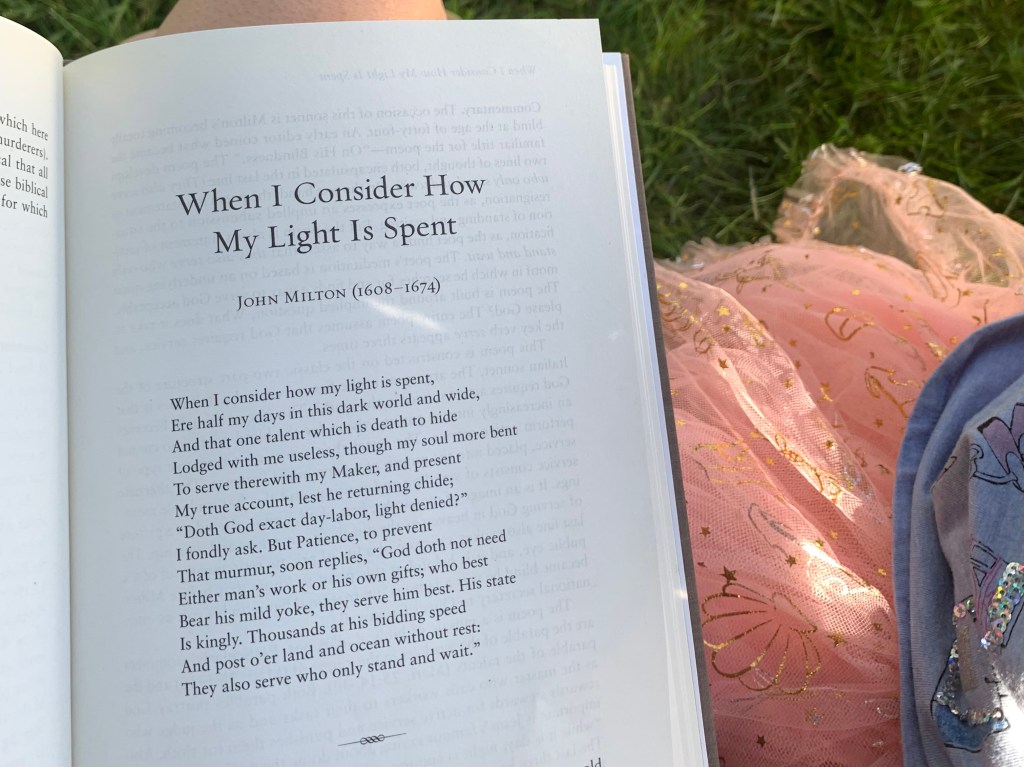
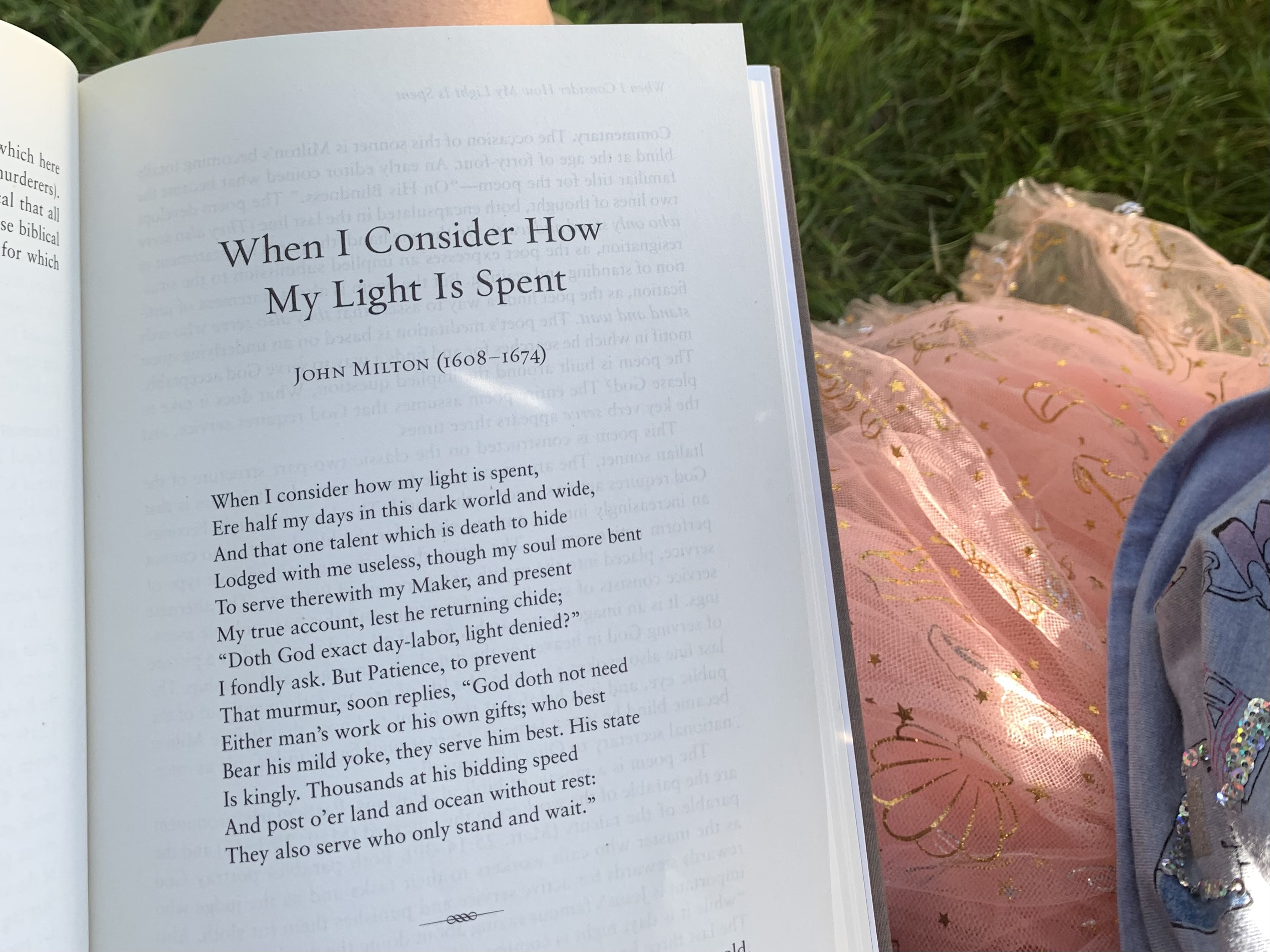
The poet John Milton touches upon this in his “Sonnet 19.” Wrestling with a “soul bent” to serve his Maker, but limited in his capacity (most probably because he was going blind), he wrote: “God doth not need / Either man’s work or his own gifts; who best / Bear his mild yoke, they serve him best.” God is King, he writes, and has thousands doing his bidding. Therefore, Milton concludes, “those also serve who only stand and wait.”
With so many needs around me and holding a shrinking plate, I am being forced to plead with God to work with what little I have to offer him. Yet even here, it’s tempting to put too much hope in what Jesus will accomplish with my loaves and fish. Surely, he loves to confound the strong by making his power known through the weak. He can and does multiply the efforts of those who serve him, establishing the work of our hands. But in the final measure, it isn’t even what God chooses to do with my meager offerings that determines their worth.
The large sums of the rich would no doubt end up being put to more use than two small copper coins. Mary’s perfume could have been sold and used for charity. Yet our Savior goes so far as to say that the first giver “put in more than all of them” because “she out of her poverty put in all she had to live on” (Mk. 12:41-44). The second, he defended publicly as doing a beautiful thing, saying, she had “done what she could” (Mk. 14:8). In both instances, Jesus recognizes the way these worshippers gave out of their limited supply and, in light of a gift earnestly given out of the confines of these limits, praises them.
The Apostle Paul writes similarly of the generous giving he sought from believers, saying, “For if the readiness is there, [the gift] is acceptable according to what a person has, not according to what he does not have” (2 Cor. 8:12). God knows both our hearts and the limits of our ability. So while he may ask for my all, he never demands more than that. I need to believe this, especially now.
A few weeks ago, my 5-year old walked ahead of me into Trader Joe’s. Greeted at the door by a display of flowers, he circled back toward me. Can I buy some for you? As soon as we unloaded the groceries at home, he brought the blooms over to me as if they were a surprise. This is for you! I’d bought the bouquet for myself but they were no less from my son.
To those who want to serve God with all your being, who have given of yourselves with a burning passion for his glory and yet find your Shepherd has led you down unexpected pathways— he is, and has always been, after our hearts. So it is that the feeblest heartfelt offering given by the lowliest of saints is not only seen, but received with gladness by our King.
Though we may mourn the immense gulf between what we hold in our hands and what we wish we could give to so great a Savior, in some ways this sense of our poverty is part of what we bring. We know we have little, but still we bring our all. Father, this is for you.
-
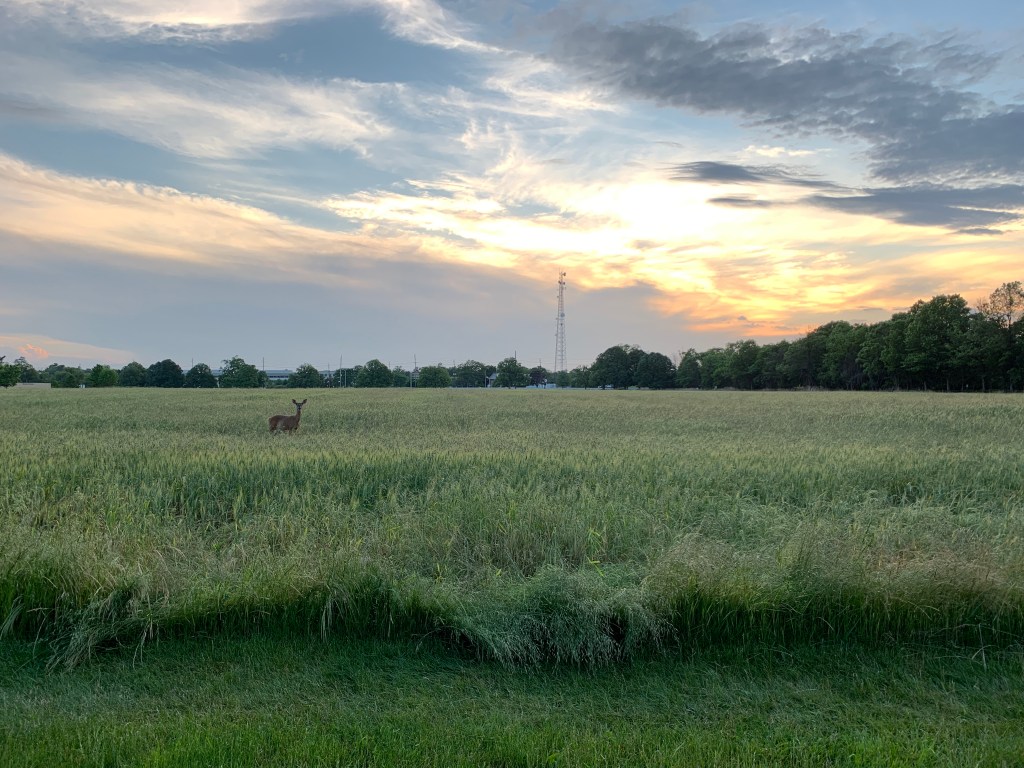
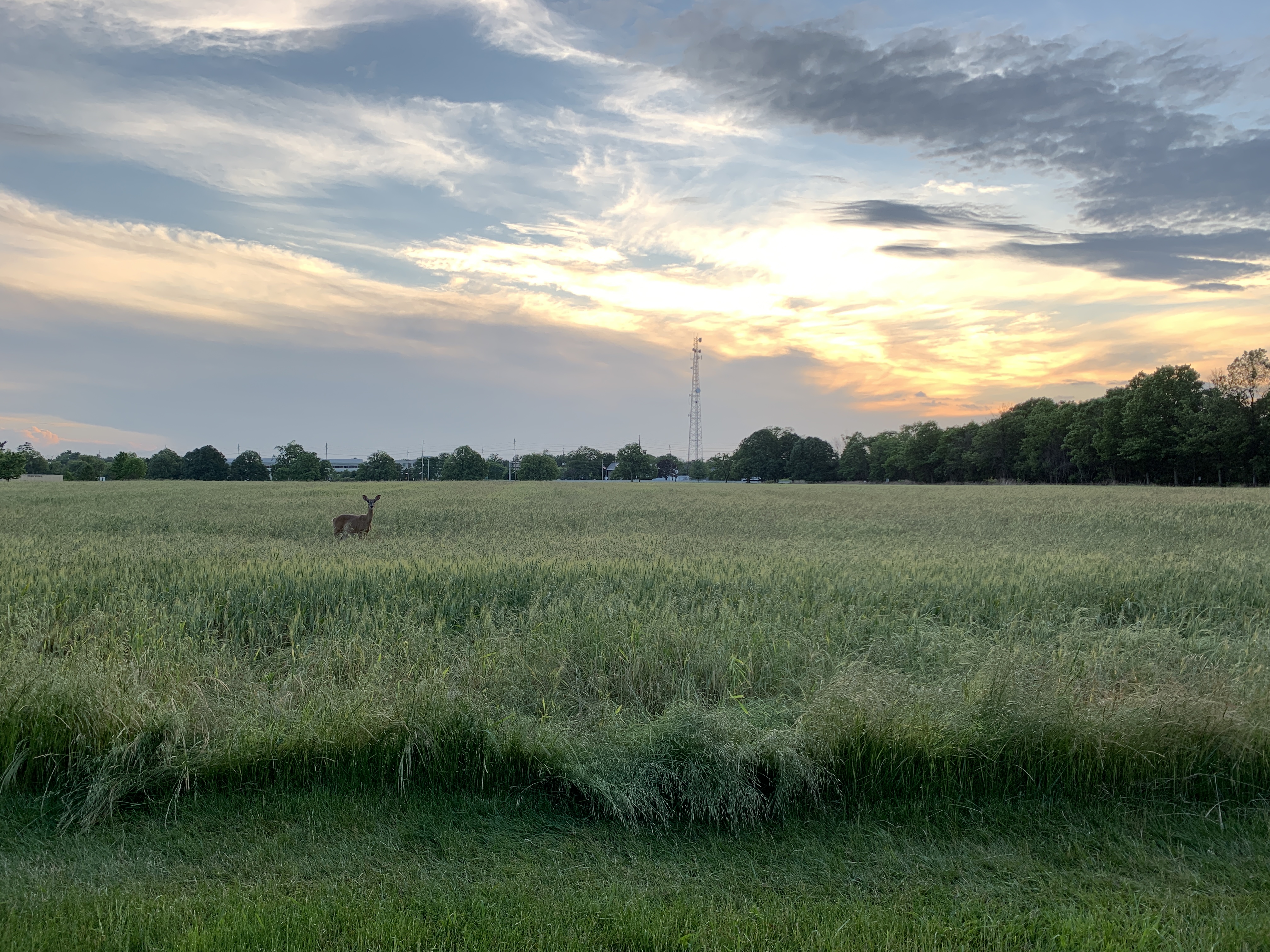
I was one of those people who got a bike a few months into the pandemic. My first ride out and away from a full house, I pedaled to a large, open field. I hadn’t been that far away from another human being for months, possibly years. Alone, I dismounted to take in the last light of the day, and a prayer came out like a long, unconsciously let-out sigh.
God, you don’t need anything from me.
It was as if my soul exhaled.
Maybe it’s because of my personality, Chinese culture, or family of origin. Or maybe it’s my firstborn-daughter status combined with intense ministry training and being a mom. At church events, standing in line at Panera, on elevator rides with strangers, reading an email, as long as another person is in my physical or mental space, I’m “on.” Unless I’m completely alone, and sometimes even when I am, I can’t help being vigilant for needs I may be called on to meet, sensitive to what demands my presence may similarly impose on others.
It’s not inherently good or bad, just a virtue of who I am which can be alternatively helpful and used for service, or unnecessarily burdensome and a source of anxiety. Knowing this about myself though, I’ve come to realize that the simple truth that God needs nothing from me is sometimes the welcome into his presence that I need.
Though there are things God requires of me, there is nothing he needs from me. This distinction is important. The psalmist, rebuking those who offered sacrifices while continuing to sin, declared that what they thought they supplied God— the cattle on a thousand hills, the beasts of the fields— were already his (Ps. 50). In fact, the world and its fullness are his. So what God required from his people in sacrifices was not food or fuel as if he needed anything. But what he desired, and still desires, is a sacrifice of thanksgiving. That they would call to him in their trouble, and in response to his deliverance, glorify him.
To call on God and give him praise is right and good— it is required of me. The Christian is called out of darkness into light in order to proclaim his deeds. But God’s wellbeing and work, these are not dependent upon me— he needs nothing from me.
This is a tender, holy, freeing truth. That he who made all things, owns all things, and doesn’t use his creation to supply his needs. Rather, he is ever the gracious Giver, ever the joyful Benefactor in our relationship, the Source of life itself.
God, you need nothing from me. I breathe out, and the knots in my stomach loosen a bit. He is solid and steady and not flustered by my presence.
If he needs nothing from me, I can pray— really pray, not worrying about my anxiety or anger or foolishness swaying his judgment or burdening his mind. I don’t need to hedge my request in polite, calculated consideration of his limited supply of patience and help.
Neither is he vying for my resources, wit, compassion, godliness, or strength. He is not looking for me to give him something he lacks. So I can heed his welcome as true and in good faith, receive and believe it is wholly for me.
The Scriptures are punctuated with this welcome: come to me, come to the waters, come eat, taste and see. There is more that I’ve been mulling over regarding God’s self-sufficiency, implications for what this means about his pleasure in what we do offer him, how graciously he receives from our hands what he doesn’t need. But for now, I want to sit on this, the way burnt out laborers, haggard moms and dads and sons and daughters, and all the weary and wary souls who come to him, will find that he gives and gives and gives, grace upon grace.
With our God is the fountain of life, and we are invited to approach it with all our neediness hanging out and spilling over. There, we the poor, thirsty, hungry, tired, sinful, and lonely, will be received with gladness— because he who needs nothing from us freely gives to all who come.
-
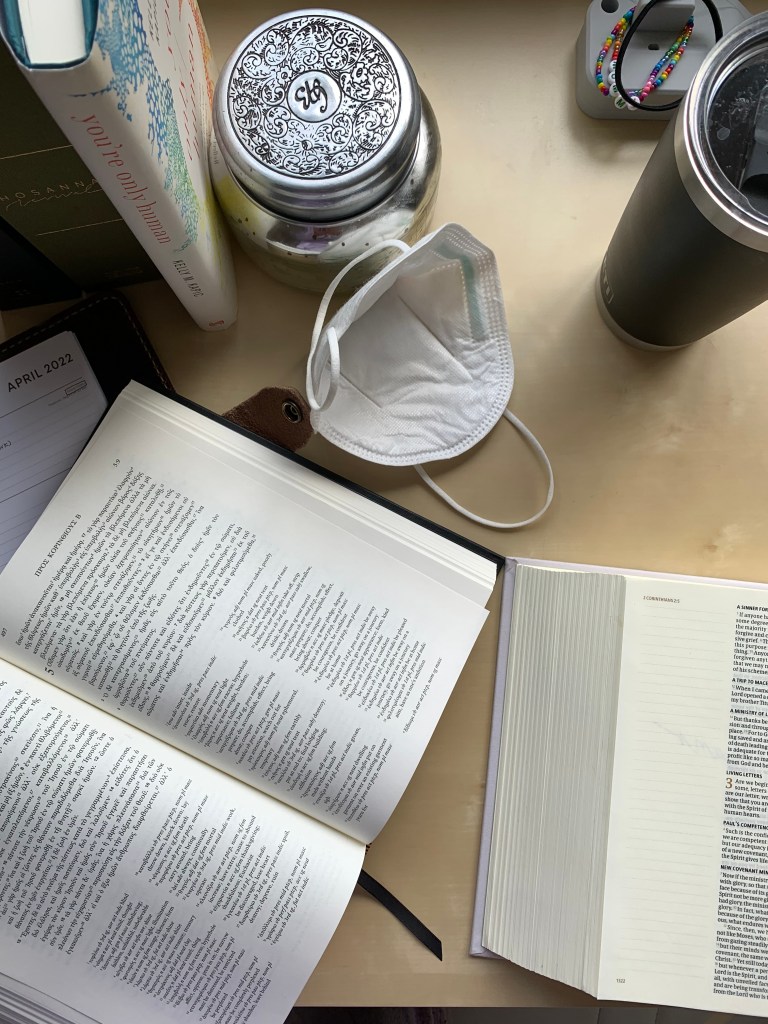
I don’t like missing worship, she told me as we streamed service. Which I was both sad and glad to hear.
Days before I knew I’d have to miss service, I was telling a few women how Easter was my favorite day of the year. I love catching a glimpse of heaven in the congregation’s boisterous singing. I am glad for the permission to unbalance my feelings for a moment, to lay aside the tension of holding the “not yet” of God’s promises and allow my heart to fully rejoice in Christ’s victory over death.
Instead, I attended service in pajamas, streaming it online with one of my girls who’s at the tail end of Covid quarantine. And though I’m grateful for our tech team who made that possible, it’s not the same as hearing the voices of God’s people fill the church. Not the same as feeling my faith rise as another takes my hand firmly, looks me in the eye, and tells me, “Christ is risen.” Instead, I spent a good chunk of the day in bed, wiped by an illness which has circumscribed much of my life for 20 years, though I’ve only recently received a diagnosis. Instead, I called another family member recovering from surgery for a brain aneurysm.
Christ is risen indeed.
I say this without irony, definitely without sarcasm. Because although I didn’t get to taste the soul-anchoring celebration I look forward to every year, Easter was an invitation nonetheless. To call to mind the sure, steadfast anchor for my soul, a hope that enters behind the veil (Heb. 6:19-20). Or, to borrow another nautical term, to turn my attention to my ballast.
I first learned about ballasts while reading up on the old church building where I worshipped as a child. After a cross-Atlantic journey to NY, the immigrants who founded the church had used ballast stones from their ship to build their sanctuary. Nowadays, ships use water pumps and tanks instead of these stones, but the purpose is the same. In order to keep vessels stabilized, weight is added below water-level to counteract the effects of the weight above it. Especially in rough seas, the ballast keeps a ship maneuverable and prevents it from becoming top-heavy and tipping over.
I feel as if this Easter, instead of attending the party above deck, I was walked down to the belly of my ship. The reality of the resurrection is not just a fact in history, a tenet of the Christian faith, or an event to be celebrated once a year. It is of first importance, an ever-present reality that keeps us whether we are consciously turning our attention to it or not. It steadies believers through storm and gale, so we are not shipwrecked. It is a ballast for life.
In one of my favorite passages, the apostle Paul wrote a series of counterfactuals describing the dreadful reality that would have been if Jesus did not rise. If Christ were not raised from the dead, he writes, our faith is futile. Because if Jesus’ lungs did not fill with air on the third day, the Bible and its gospel is a lie. If there weren’t a moment in time when his heart hadn’t been beating– and then (hallelujah!) began to pump again, there is no forgiveness of sin. No life after death. No hope beyond the grave. Christians are the most pitiable of all people if Jesus did not walk out of that tomb, leaving his grave clothes behind. (1 Cor. 15:14-19)
Then he goes on to say, but. But Christ has indeed has been raised from the dead (1 Cor. 15:20). So, the implication is, the opposite is true. The gospel is true and the Scriptures are reliable. Those who have died in Christ will live. We are not in our sins. We are not to be pitied.
What’s more, Paul explains, is that Jesus’ resurrection was not merely a reversal of death. It was the beginning of a new kind of life. The life Jesus rose to was of a different quality than the one he’d laid down at the cross. His body, sown in dishonor, was raised in honor. Sown mortal, he was raised immortal. Sown in weakness, raised in power. He was the first man to be resurrected this way, but as it was with him, so it will be with us (1 Cor. 15:42-49).
This is my sure and steady hope in life and death. In pandemic quarantines, and chronic illness, and uncertainty about loved one’s health. In anxiety, and weakness, and broken bodies, and struggles with sin, and the world’s innumerable sadnesses. That Christ was the firstfruits of those who have died, his resurrection guaranteeing the harvest to come. That when he returns, those who belong to him will be likewise transformed. That the resurrection seals all God’s promises as true. That I do not speak to, look to, or hope in a dead God, but one who lives and reigns forever. That I am truly forgiven. And that Jesus is still alive, even when it doesn’t feel like Easter.
Beloved, our faith is not futile. Not on Good Friday, Resurrection Sunday, Easter Monday, or any day that follows because Christ is still risen.
He is still risen indeed.
-
“You come of the Lord Adam and the Lady Eve,” said Aslan. “And that is both honor enough to erect the head of the poorest beggar, and shame enough to bow the shoulders of the greatest emperor on earth. Be content.” – C.S. Lewis, Prince Caspian
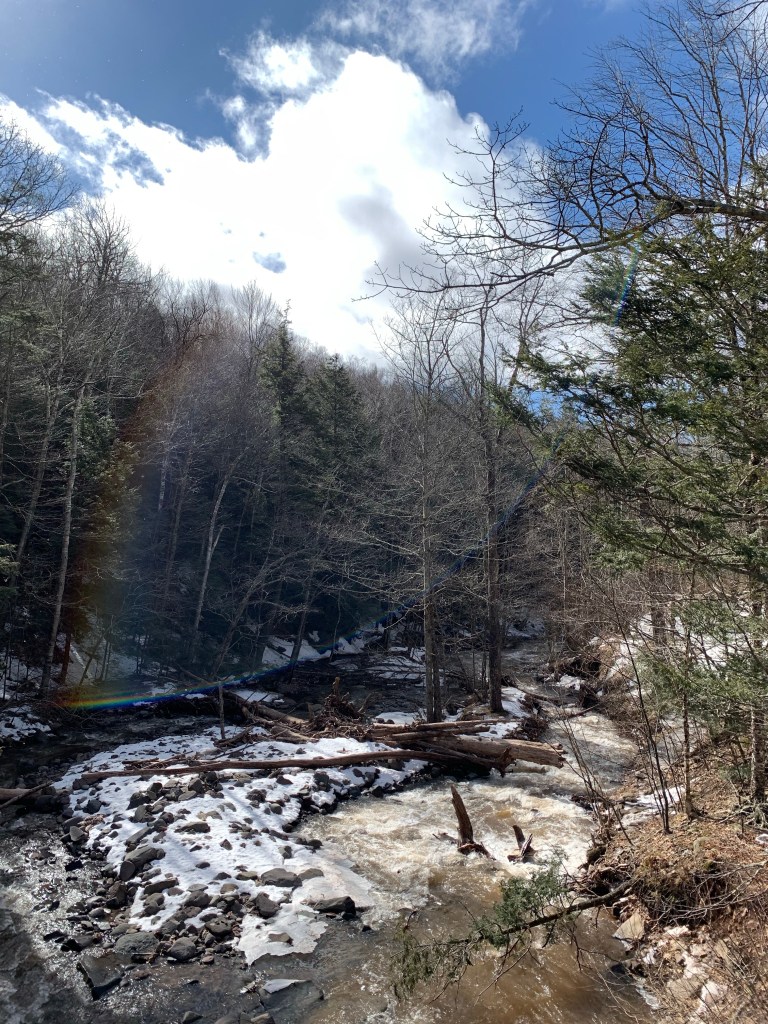
Jeff and I arrive at our tiny cabin after dark, but the pines are still up. Throughout the night, I wake to watch their sparsely needled tops swaying over us. In the morning, they are no less mesmerizing. They wave without bending, their slender trunks shooting straight from dirt to sky. I feel my spine straighten, mirroring their posture. Shoulders back, daughter of Eve.
The poet Mary Oliver wrote, “Everywhere I go I am / treated like royalty, which I am not. I thirst and / am given water. My eyes thirst and I am given / the white lilies on the black water.” I feel this on our trip to the Catskills, the sheer grace of the world before and under me. That our thirst would be quenched by its rains, our hunger for beauty satiated with tiered waterfalls— who are we, if not of noble blood?
In our fervor to maintain the greatness of God, Christians can diminish the dignity of our humanity in ways that aren’t as biblical as they seem. Self-deprecation comes naturally to me, and in my brokenness it often feels right to slouch in a corner, to make myself small under shame for fear of doing wrong. The enemy of my soul would have me believe that’s where I belong. At the window by the pines though, the Spirit speaks to me of a better way.
There, I think of the biblical poet who, in light of creation’s grandeur, asked God: What is man that you are mindful of him, and the son of man that you care for him (Ps. 8:4)? It isn’t hard for me to understand his wonder. One look up on any clear night will fill me with a sense of humanity’s smallness and the surprise of God’s ongoing care. But it’s the follow-up to the question that comes to life for me now, maybe for the first time ever:
Yet you have made him a little lower than the heavenly beings
and crowned him with glory and honor.
You have given him dominion over the works of your hands;
you have put all things under his feet.
Ps. 8:5-6These verses have always struck an unexpected note for me, the way the psalm doesn’t continue to dig into our smallness in order to put us in our place. Reading “what is man?,” I half-expect the psalm to segue into the bad news-good news presentation of “You’re a nobody, but you are loved!” But the psalmist doesn’t take that route.
Here is our place in this world, granted by the Creator himself. We are created a little lower than heavenly beings. No, we are not God, but neither are we nobodies. We are rulers, crowned with glory and honor, given dominion over the earth.
This Edenic understanding of our humanity as expressed in our rule over creation is different from what we Americans usually associate with royalty. We think of celebrity (they’re famous!) or wealth (they’re rich!), high social standing or fantastical romances. What Psalm 8 unearths about our royal natures is far weightier than those things— calling, dignity, glory.
Oliver wrote she was treated like royalty although she isn’t. Perhaps it would be truer to say that we are treated like royalty because we are. Our first father and mother were rulers, blessed to cultivate and create in the world as representatives (images) of their Sovereign. Though fallen, we are still their children, and as such, kings and queens just by virtue of being human.
The pines showed me what it might look like for me to walk aware of the glory that crowns us. They stand tall with their own particular glory, fully arrayed with an honor that rightly belongs to them. They need not make themselves smaller or larger than what they are. They are unashamedly and fully themselves, and yet nothing about them is vain. A Korean-American actress recently said, “It’s an honor, just to be Asian,” and in the woods, the phrase comes back to me with a twist. It is an honor, I think, just to be human.
Counterintuitively, this stirs up a new kind of humility in me, one that doesn’t pummel me into submission, but lifts some of the weight off my drooping shoulders. It may be self-evident, but still worth remembering that we didn’t choose our existence. We didn’t cause ourselves to be, and yet here we are. We didn’t create this world we inhabit, and yet we have inherited it. What do you have that you did not receive?, the apostle Paul wrote. Our dominion as humanity is derivative. God crowns us, he has put creation under our feet. But that’s the thing, we really have been granted glory, honor, this world. I am born and look!, here is drink for my parched throat, beauty for my thirsty eyes.
This is cause for trembling too, I realize, our being sons and daughters of Adam and Eve. Sin takes on new gravity when we consider that if we are rulers, our rebellion is not only treachery, but tyranny. We may have relinquished our ability to rightly govern this world under God, but as image bearers we still have the power to alter the course of history like no other created being. No matter what, we always exercise some form of dominion. And when we operate outside the Creator’s bounds, we rule as madmen, destroying the earth and harming those around us. Here I see that humility is not a shrinking back, but a taking up. It is a weighty thing to be human, to bear the responsibilities of one created for glory with others similarly crowned.
Here’s another thought— Jesus became man. We who are in Christ are co-heirs with him because the ruler of the universe took on flesh and became a servant unto death (Rom. 8:17). If we are rulers on this earth by birth, we become royalty in the everlasting kingdom by rebirth (1 Pet. 1-2). Our humanity is being redeemed and we worship one who is forever fully God and fully human. Can there be anything more incredible about our humanity than that? That Christ shared in it not to reject and despise it, but to restore it to us and us to it?
I am still feeling my way through what it means to live with this newfound sense of honor and dignity in my humanity. But I am beginning to see how it fuels awe-filled gratitude, strips away my compulsion to compare, girds me with a kind of quiet courage.
I do not need to walk with the projected confidence of someone trying to invent myself or command the room. I am not elbowing my way to my place, because it has already been granted to me. I seek to stand with the steadiness of heart my King had when he, knowing where he came from and where he was going, wrapped a towel around his waist and knelt to wash and dry feet.
Read the gospels and you’ll see how Jesus restored the dignity of all he encountered. How he defended the despised, how he touched and asked questions and listened. Something about the way he moved among us communicated that each broken person still bore his image, still was bestowed with the honor he granted them at creation. He is doing this for me now.
So, here I am. Truth I’ve long known in my head is making its way down into my heart and backbone. I stand as daughter of Eve, and I am content to take my place. Truly, it is an honor.
-

I’m not sure about the exact numbers, but a good portion (maybe most) of the books I’ve read for leisure in the past few years have been memoir. So many things about the form captivate me. The intersection of storytelling and deep reflection, the invitation to walk the landscape of the memory through well-crafted vignettes, the masterfully-woven themes that slowly emerge. The best ones simultaneously awaken in me a sense of beauty and heartache, no matter how mundane the stories themselves may seem.
Every person carries stories that, if you knew them, would break your heart.
At an airport gate, a young man sits next to me and we make small talk. He tells me why he feels nervous about returning home, about who he’s leaving behind on the East Coast. Friends he’s made and a girl he likes. He begins to tear up. Sorry for dumping this all on you, he says, clearly surprised he said what he did. I tell him that I’m a pastor’s wife and that I’m used to it, people telling me these types of things, before letting him change the subject.
My healthcare provider tells me about what’s going on in her social circles as she works on my back— emergency room visits and disease and suicide. She says it seems like everyone she knows is going through something, and I murmur my agreement as I lie facedown on the table.
During a conversation with a friend, It feels like everyone we know in ministry is getting beaten up. Maybe that’s ministry though. Then a pause. Maybe that’s just life.
This does seem to be the plotline for many these days, hard thing after hard thing. Yet in the midst of it all, I’ve noticed another theme slowly and persistently begin to emerge in the lives of dear ones I know.
I hear it in the voice of fellow workers in ministry. They preach, and pray, shepherding flocks through the devastation of a global pandemic and the destructiveness of indwelling sin. They visit the unrepentant, pleading for them to turn to the grace of God. They are tired, but are not giving up hope that God loves his people.
I read it in the words of friends texting for prayer, chronically ill or caring for those who are, facing loss or mourning unfulfilled hopes. We are all praying for healing, for God to grant them the good desires that he withholds without explanation, but these friends also ask for grace to trust Jesus, courage to love others better. They continue to love the weak and hurting, even as they themselves cry out for relief. All I want for one friend is for her suffering to stop, but she is asking me to ask for more— for rest in God’s love and mercy, for joy in his faithfulness, for hope in his promises, and for endurance.
I sense it in the songs sung by the sinner-saints meeting weekly in our small, local church. Battered and broken, we declare the goodness of Jesus, believing God hears and receives us, that he sees and remembers.
I saw it on the other end of that flight with the tearful young man, where over the course of a few days, I caught up with those who knew me when I was fresh out of college. In even the shorter conversations, I got glimpses of what they’ve been rejoicing in and what new or old things continue to be difficult. Many are walking through loss, uncertainty, and trauma— yet still seeking Jesus, still committed to being in his church. And this time, I was the one crying in the airport on the way home, moved by how clearly I witnessed in them the faith described by Peter in the Scriptures. Though they have not seen God, though they don’t see him now, they love him still (1 Peter 1:8).
I am experiencing in real time the perseverance of the saints. And like the best of stories, it is both heartrending and achingly beautiful.
The Apostle Paul wrote that suffering produces endurance, and from that character, and then hope. I have been thinking lately about why he’d write hope there— not love or godliness. Or why not just end at “character”? Why make hope the culmination here of what God does in the midst of suffering? I am beginning to see now that God does not just make his people stronger or more righteous through trial. We all know that sometimes difficulties make us stronger, that suffering can produce character even without God in the picture. But for believers in the heat of affliction, something otherworldly emerges: a hope against all hope, a faith that perseveres.
I have never had trouble believing that God raises the dead, but that he keeps his own until the end— the longer I have been a Christian, the harder it’s been to trust. It sobers and humbles me now then, how God is using the trials of those around me to deal with my unbelief. Through the fire, I am seeing the precious genuineness of the faith of God’s children, and I stand silenced. The people of God have always been a persevering people, a people learning to hope against hope. And this hope is miraculous in its very nature.
Christian perseverance, Christian hope, is not a fake-it-til you make it, silver-lining way of dealing with suffering. Neither is it flashy, spiritual triumphalism nor self-reliant grit. It is salvation worked out with blood, sweat, and effort and worked within by the Holy Spirit. It is the tested faith of those who have found safety in the one who has been a refuge for all generations. Its beauty is like that of century-old forts, made of solid stone, enduring battle, the elements, and time. We have tested it and found it to be trustworthy, but it still takes faith to believe it will continue to stand in time to come.
This perseverance says that though I do not yet see God making all things right, he will do so one day. That though I do not feel like what he has ordained for me is good, he who gave his own Son for me will not withhold from me anything truly good. It says that though I am weak, and confused, and uncertain about many things, God remains steadfast in his love and unchanging in his ways. That though things all is not right, he still indeed is good. That what is seen may lead me to despair, but there are realities beyond what I can see that give me reason to hope. Not the least of which is the truth that Christ lived, died, and now lives.
I have felt this hope in the handshake of the strongest of believers. A widow at the end of a receiving line of her husband, a pastor’s, funeral. They’d lived through the cultural revolution. She’d worshipped in the dark with her children, curtains drawn. He’d survived harsh labor. She took my hand, looked me in the eyes, and spoke, her voice gentle and firm, Ganxie Zhu— an expression of praise. And I wondered if she was here ministering to us rather than the other way around.
I have also seen this tenacity in the saints who feel themselves to be the weakest. I think of how sometimes the smallest of plants can be surprisingly hard to uproot. I’ll tug at the tinier weeds in the garden, assuming they’ll come out with no issue, only to have the stems snap where they meet the soil and the roots remain intact. Here is the woman who, in the absence of tidy answers, remains sure of what she hopes for, certain of what she does not see (Hebrews 11:1). The weary servant of God who confesses that while he is pressed, he is not crushed, he is perplexed but not driven to despair (2 Corinthians 4:8-10). Both have tasted and seen that the Lord is good. God has been faithful to keep his promises, and they know there is more reason than not to continue to trust him now.
And I witness it in the lives of believers all around me now. In the absence of seeing, in suffering, their hope is being forged and proven, because, who hopes for what he already has? (Romans 8:24). Ours is a supernatural faith, and it’s only when it’s against all odds that we know, surely, it must be upheld by a supernatural strength.
We may not all have memoirs in the pipeline, but, oh, what stories we will have to listen to and tell in ages to come. Whether God’s strength working in us means we will one day find ourselves sprinting across the finish line, or whether we feel for sure we will be limping, inching, and clinging onto dear life up to it, we will declare him faithful who has kept us. Through stories of darkness, dangers, grief, and trial. Of faithful endurance, inexplicable peace, and hope that has not put us to shame. By God’s grace, I’ll have a few to share. Dear, persevering saint, you will too.
-
What woman is this?
Earth on her hands from fields not yielding,
Eyes to the horizon and face set as flint,
Her lips part for prayer and laughter.You whose song rises
In empty orchards and by barren vines,
You walk this soil clothed in honor—
Surely, you are her daughters.



-
Subscribe
Subscribed
Already have a WordPress.com account? Log in now.
 Keeping Heart